THE ART OF SABRAGE - A Timeless Tradition
In the art of celebration, every detail matters. From the graceful pour to the final toast, each gesture shapes the elegance of the moment. While most of us have raised a glass of champagne to mark life’s milestones, far fewer have witnessed — let alone mastered — the captivating ritual of sabrage: the art of opening a bottle with a single, decisive strike.
This dramatic tradition traces back to the Napoleonic era, when victories were celebrated with flair. Napoleon’s hussars were said to ride straight into festivities, draw their sabres, and, with a confident strike just below the cork, slice open bottles of champagne — adding theatre and bravado to their triumphs.
What began as a bold gesture soon evolved into something more enduring. Sabrage became a symbol of triumph, ceremony, and refined celebration — a distinctive
way to mark life’s most memorable moments.
Today, as we gather to toast birthdays, weddings, anniversaries, milestones, and moments of joy, something often feels missing. In a world of elevated tastes and curated experiences, the simple pop of a cork can feel almost understated.
We crave theatre.
We crave a sense of occasion.
We crave something truly memorable.
And yet, sabrage — this historic act of celebration — has remained largely untouched. To many, it feels intimidating or out of reach, reserved only for professionals or special occasions. But what if it didn’t have to be?
A Modern Revival
In recent years, modern makers and hosts alike have begun reimagining sabrage for today’s world — refining the ritual into something more accessible, balanced, and elegant, while preserving its sense of drama.
When approached with the right preparation, confidence, and craftsmanship, sabrage becomes less about force and more about finesse — a ritual that transforms the opening of champagne into an experience worth remembering.
Whether celebrating a wedding, a corporate milestone, or a personal achievement, mastering the art of sabrage adds sophistication and spectacle to the moment.
New to Sabrage?
A Refined Step-by-Step Guide
Before beginning, always ensure you’re performing sabrage in a safe, open space — clear of people, pets, and fragile objects — with enough room for the cork to travel freely.
Step 1 — Chill the Champagne
Proper chilling is essential to achieving a clean break. The ideal temperature is 3–5°C (37–41°F), which reduces pressure and minimises foaming.
Chill the bottle in the refrigerator for at least four hours, or in an ice bucket for around 30 minutes. For quicker results, place the bottle neck-down in ice so the top cools more efficiently.
Step 2 — Prepare the Bottle
Wipe the bottle completely dry to ensure a firm, secure grip.
Carefully remove the foil to expose the neck, then loosen the wire cage by twisting the loop anticlockwise. Keep your thumb gently over the cork as you remove the cage entirely.
Step 3 — Find Your Grip and Position
Hold the base of the bottle with your non-dominant hand, placing your thumb securely in the punt (the dimple at the base) for stability.
Angle the bottle upward at 30–45 degrees, pointing it safely away from yourself and others.
Step 4 — Position the Sabre
Locate the seam of the bottle — the faint vertical line where the glass was fused.
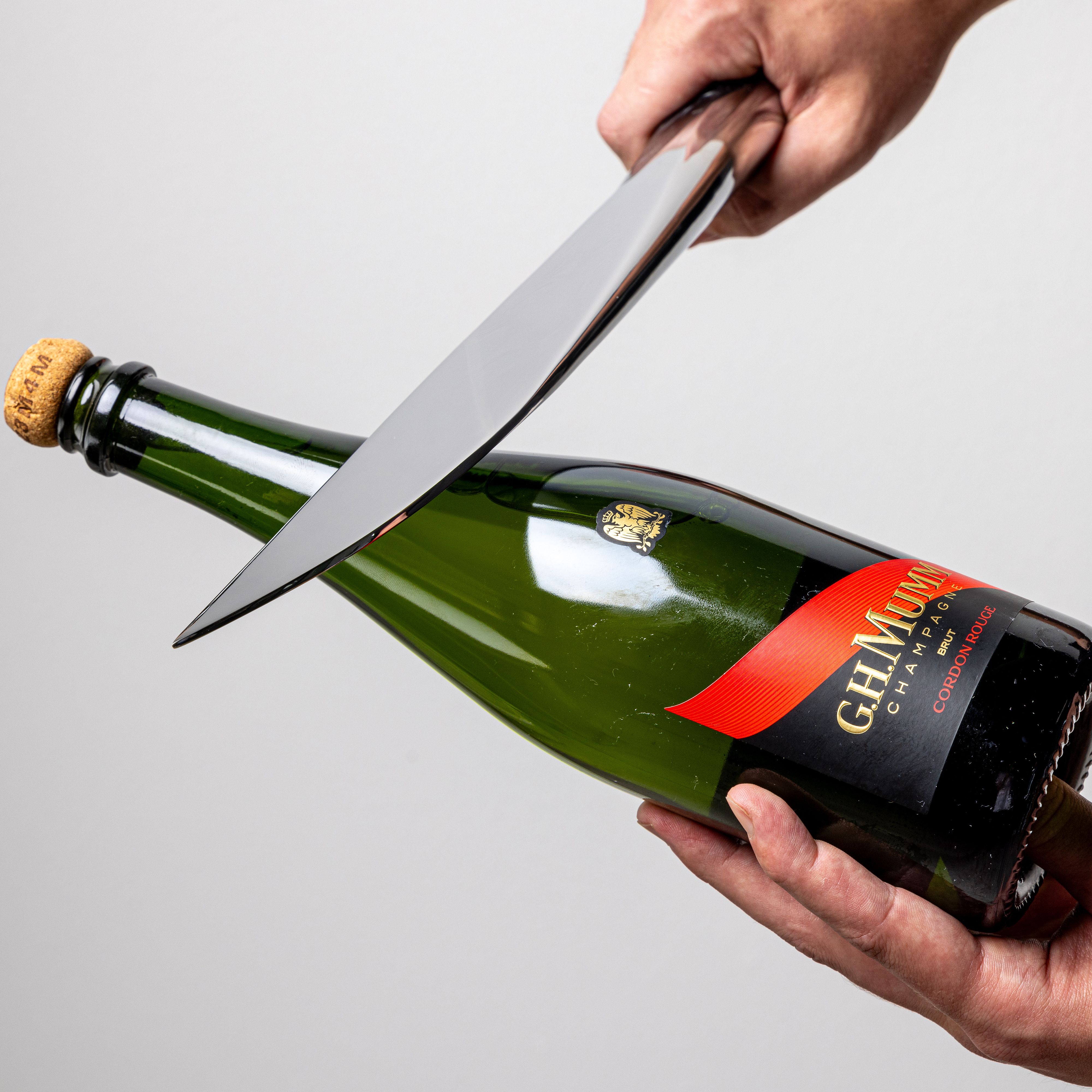
Place the flat side of the blade against this seam near the base of the neck. Aim for the point where the seam meets the lip — the bottle’s natural weak point.
Step 5 — Perform the Strike
With calm confidence, slide the blade smoothly along the seam in one controlled motion toward the lip. Allow the weight of the blade to do the work — force is unnecessary.
Follow through cleanly, letting the cork release and fly freely.
Voilà.
Toast to your success — and to the timeless art of celebration.


About The Author

Jordyn Deamer
February 11, 2026Jordyn Deamer is the Retail Manager at The Reserve Cellar, bringing a sharp eye for detail and a passion for premium wine to every bottle on the shelf. With a background in hospitality, events, and tourism, she honed her expertise in five-star hotels before stepping into the world of fine wine retail. Armed with a Bachelor’s in International Hotel and Tourism Management, Jordyn seamlessly manages inventory, pricing, and customer experience, ensuring every visit is exceptional. Always on the lookout for exciting new drops, she loves nothing more than helping customers discover their next favourite wine—especially if it’s a cool-climate Tassie Pinot Noir on a cosy winter night.

All Blogs